

I work with women who keep losing themselves in relationships.
Hi, I’m Aimee.
If you're here, you've probably spent years trying to figure out why you keep choosing emotionally unavailable partners, why you lose yourself the moment you fall in love, why you can see the pattern coming but can't seem to stop it.
You've read the books. Perhaps done some therapy before. Had insights that felt like breakthroughs… And then found yourself right back where you started.
I get it. I've been there, too.
I know what it's like to overthink every interaction, to abandon your own needs to keep someone close and to shrink yourself so you don't take up too much space. And I know that advice doesn't fix it. Skills don't fix it. Even insight, on its own, doesn't fix it.
What can help is relational work. Deep, slow, uncomfortable work that goes beyond what you think into what you feel and how you've learned to survive.

Why I do this work
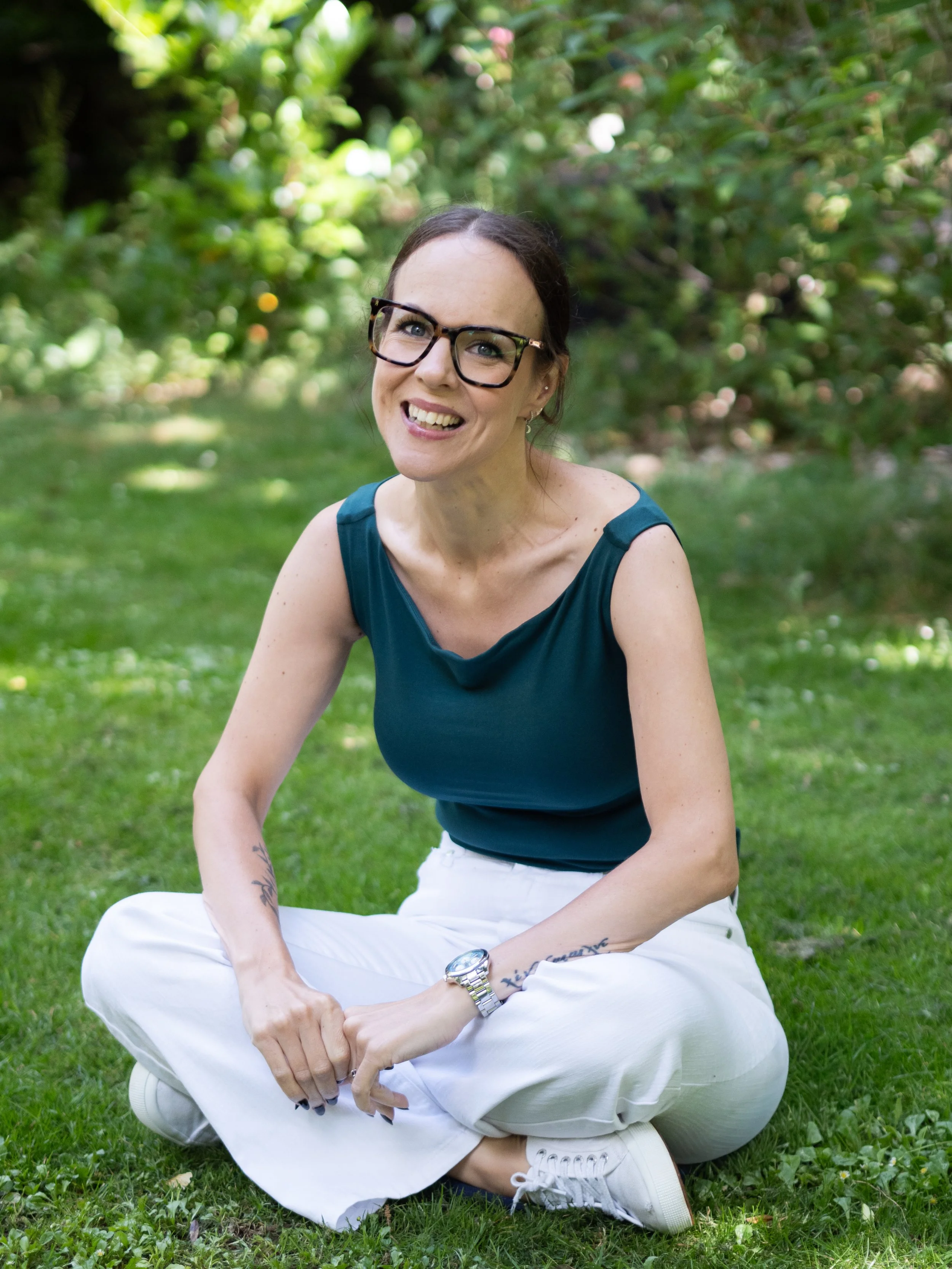
I'm a feminist. An angry one. And I'm deeply invested in creating a world where women don't have to perform, accommodate or minimise themselves to be loved.
Too many women come to therapy having been told the problem is their communication style, their attachment issues, their inability to just "choose better". But the real problem is that we live in a world that teaches women their worth is conditional. Conditional on everything from being agreeable to displaying a bit of feistiness, being sexually available but not by too much, being ambitious but not threatening, being independent but not intimidating…
No wonder we lose ourselves in relationships. We were never given permission to be ourselves in the first place.
This work isn't never about fixing anything within you.
It's about understanding the relational patterns you developed to survive, and creating space for you to show up differently. And not because you should, but because you actually want to.
I hold an FdSc in Counselling from Middlesex University, I'm registered with the National Counselling and Psychotherapy Society (NCPS) and I receive fortnightly clinical supervision. I work with women online across the UK and in person from my practice in Bisley, near Woking, Surrey.
I also have my own therapy. I set my own boundaries (not always easily). I work on my own patterns. I know firsthand how fucking hard it is to show up differently when every cell in your body is screaming at you to accommodate, to smooth things over and to make yourself smaller.
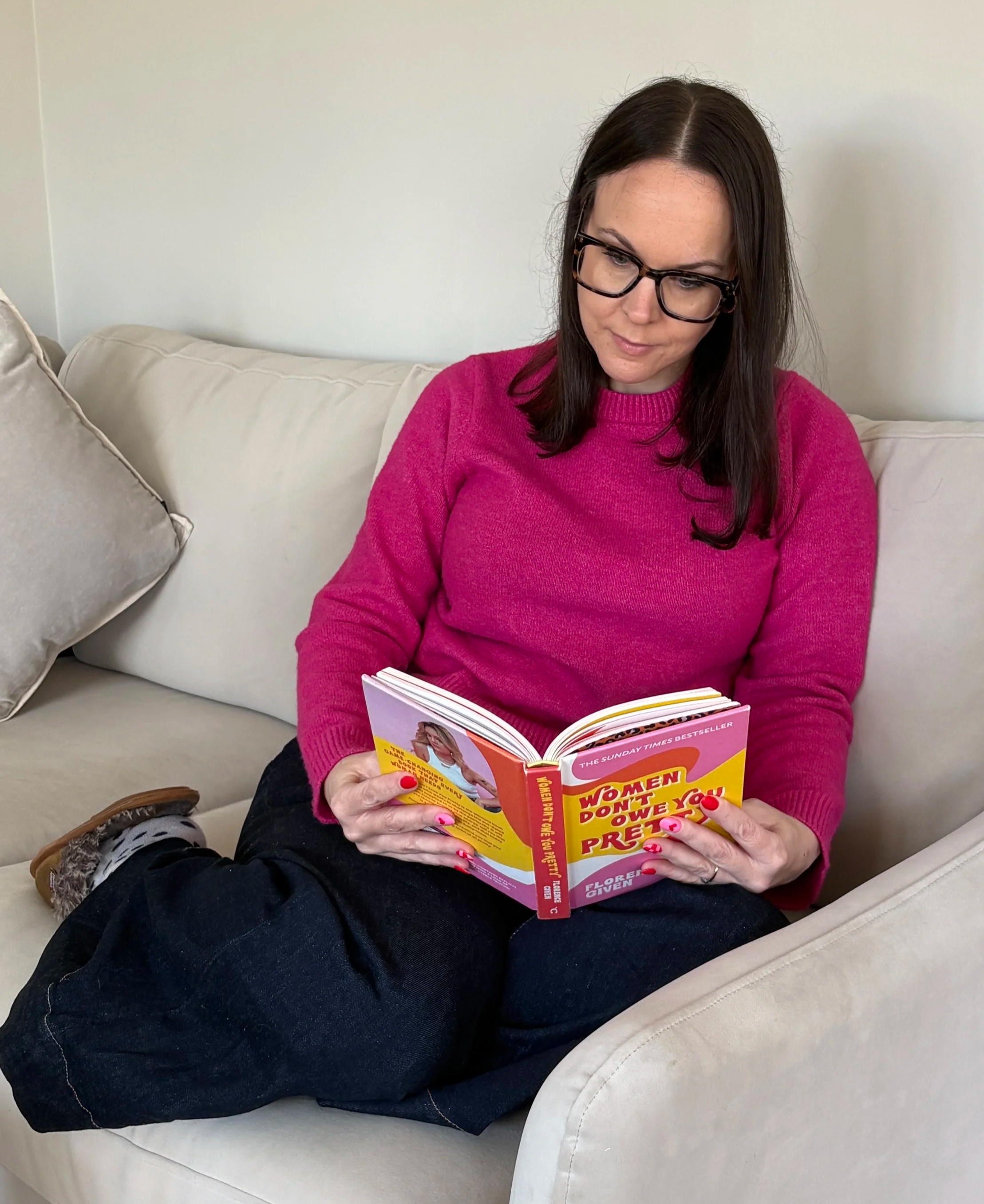
I'm an elder millennial, a sweary angry feminist and unnecessarily dramatic about most things (typical Scorpio). I'm sex-positive and culturally inclusive because I refuse to work in a way that makes any woman smaller or erases the context they're living in. I believe women should take up space, that anger is information and that you're not here to be fixed; you're here to unlearn relational patterns that were never yours to take on in the first place.
I'm not here for toxic positivity, quick fixes, fluffy thera-speak or therapy that ignores the social and cultural forces shaping your relationships. I'm also not here to minimise your rage or make you more palatable to others.
When I'm not in the therapy room, you'll find me on long walks with my dog, drinking good coffee from independent cafes, kickboxing, listening to 90s/00s hip hop and R&B, or watching horror films that'd keep most people up all night. I'm also partial to custard creams and oversharing.
A bit about me…
How I work
I'm a relational psychotherapist with a strong psychodynamic orientation, which means I'm interested in what's happening under the surface: the unconscious patterns, the defences and the parts of yourself you've learned to hide or silence. My work is shaped by:
Psychoanalytic thinking
Like Sigmund Freud on transference and countertransference, Anna Freud on defence mechanisms, and Kleinian object relations theory
Developmental theory
For example, Erikson's psychosocial development and Winnicott's ideas about the holding environment and being "good enough"
Relational theory
Particularly Clarkson's model of the five therapeutic relationships, and the Rogerian principle that you are the expert on your own experience
Feminist psychology
I especially love Jennifer Cox's book Women Are Angry, which sits at the centre of how I understand women's relational struggles
I work with you, paying attention to what's happening between us, noticing the patterns that show up in our relationship and using that as a mirror for what's happening in your life.
Therapy with me is active and reflective. I'll challenge you. I'll notice things you might not see. I won't let you disappear into overthinking without gently pointing it out.
But I also won't tell you what to do or how to fix it, because this isn't about advice. It's about building the capacity to tolerate discomfort, to sit with ambivalence and to stop abandoning yourself the moment things feel hard.
This is slower than you'd like. Deeper than most therapy you've done. But it works.
Why I don’t work with couples

I get asked this a lot.
I work with you, not your relationship.
If you come to me struggling with relationship anxiety, repeating the same patterns in dating or losing yourself in love, we're not going to focus on communication tools or how to make your partner understand you better.
We're going to focus on why you disappear, what you're afraid of, and how you learned to relate this way in the first place.
That work happens in individual therapy. It requires space to explore your inner world, your unconscious patterns and your history without the pressure of fixing a relationship in real time.
If you need couples therapy I'm not the right fit, although I would be happy to make a referral to someone who might be. But if you need to understand why you keep ending up in the same relational dynamics, even with different people… Well, that's exactly what this work is for.
If what you've read here sounds like the kind of therapy you've been looking for, get in touch to enquire about working together. I’d love to hear from you!
You don't need to know exactly what you need from therapy, just tell me a little about what's bringing you here and I'll let you know what the next steps would look like.